I can’t be the only one who approaches a maki menu with trepidation. A typical volume would make Tolstoy proud, invariably spanning a dizzying number of pages and requiring mnemonist levels of recall.
Chef and owner Eric Park’s Momomaru offers an elementary antidote to this predicament. You’ll find nary a slice of sashimi or nigiri. There are no uramaki or gunkan to puzzle over. Instead, Park offers guests one format – temaki, aka handrolls. The cylindrical preparation forms the core of the menu at Momomaru.
Laser-like focus is rarely a bad thing, especially in the food world. The cookie monster has few detractors for his singular canon of work after all. Momomaru was one of my ones to watch for 2026, primarily for this unabashedly controlled approach, not least for another notable fact: Park was also involved with the opening of the OG Nohm.
With such a pared-down approach, quality of craftsmanship is key. Indeed, obsession might be a better word. In a recent interview with Kolbie Peterson in the Tribune, Park explained the lengths he goes to perfect Momomaru’s temaki. For example, the rice alone is a special import, with the recipe adjusted daily to account for humidity levels. It’s then replaced every eight to twelve minutes to ensure the kitchen crew is only using optimally prepared grains. Indeed, I saw that happen right before my eyes, during a recent lunch visit.
Rice is an admirable infatuation in my book. Tired rice quickly becomes dense, gluey, and leaden; a point demonstrably made clear to me by Johnny Kwon and Chef David Hopps a decade ago (see this story on the much-missed Naked Fish / Ikigai).
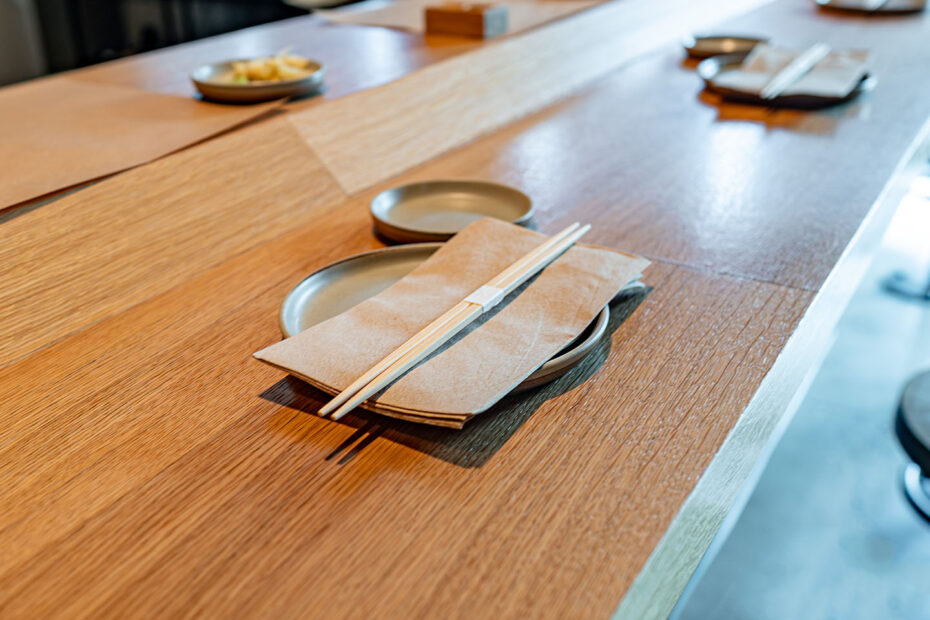
The restaurant’s decor, both inside and out, reflects the minimalist attitude of the menu. There’s no signage to speak of. A small decal on the front door is the only indication you’re in the right place. Through the door, the aesthetic is similarly spartan. The room is dominated by a large wrap-around counter seating setup. As you enter, glance to your left for the specials board, and grab one of the paper ordering sheets.


Further removing paralysis analysis from the ordering equation, the menu begins with six set options, each sporting three to six rolls. Ala carte is also available. All it takes is a pencil flourish to get underway. Things progress swiftly from there. I opt for the “starting four” assortment for a brief lunch visit; the foursome includes toro, salmon, lobster, and tempura shrimp. The first lands on the counter ahead of me, quicker than my drink in fact.
A spicy tuna handroll is notable by the beaming ruby red chunks of fish. These are clearly not repurposed scraps resuscitated with sriracha. The fish is largely unadorned, save for a mild sesame gilding. A baked lobster roll is fabulous, bursting with sweetness, while a tempura shrimp roll is equally impressive, the shellfish encased in just-right shattering tempura. It wouldn’t surprise me one iota if Park hadn’t spent dozens of weekends obsessing over a precise batter recipe for our altitude.
For me, the most compelling item from that interview is the ariake nori that Park leverages for the rolls. The seaweed is known for its crisp texture. According to Park in the Tribune story, the restaurant is the only one in the state to use it. I guarantee other chefs will jump on board after a visit here. The nori offers a distinctly different feel. The seaweed is thin, with very little chew or tug to each bite; it holds up admirably to the steamy warmth of the rice, and it doesn’t clag (apparently that’s one of my Britishisms, you’re welcome for requiring Google and Wikipedia to read my average stories) on the back of the palate. The seaweed remains crisp to the last bite.
Those four rolls are plenty enough for a mid-day visit, and I complete the quartet in barely 20 minutes. It’s worth noting that guests dictate the menu pace at Momomaru. The crew working the counter won’t build your next roll until your present one is finished – I can’t imagine any meal lasting an inordinate amount of time, though. The rolls demand eating as they land, at least if you have any amount of respect for the intentional efforts. Are you going to let your temaki sit on the counter for 20 minutes while the kitchen in front of you is recycling rice at twice the rate? That alacrity will no doubt appeal to many.
An equally enticing draw would be the relatively affordable pricing. Given the boutique ingredients and rapid rice replenishment, I was surprised by the modest prices. Rolls run $3.75 – $7.50 each, with the preset options affording cheaper combos. The “starting four” I mentioned, clock in at a very friendly $17. Momomaru is also one of the select few in the state that offer a tip-free business model; a 16% gratuity is added as standard to each ticket.
It’s heartening to see more chefs taking riskier bets like Momomaru. Each opening undoubtedly unlocks the door to more creativity and innovation, as onlooking chefs ponder nudging the needle ever forward themselves. Park’s wager is already paying dividends it seems – the crowds have already started to arrive if the bustling social media pics are anything to go by.


Want even more?
Subscribe to our paid newsletter and help keep our stories free of automated advertising. Moreover, you’ll get exclusive access to an unfiltered dive into all the dishes and drinks that pass my way. The good, the bad, the ugly.
Subscribe NowOther useful links
- Free newsletter – signup and receive our weekly newsletter for free
- Food talk group – chew the fat with other like-minded Utah foodies over on Facebook.
- Best of SLC 2024 – what you can’t miss in the Beehive right now.

Hi, I’m Stuart, nice to meet you! I’m the founder, writer and wrangler at Gastronomic SLC. I’m a multiple-award winning journalist and have written in myopic detail about the Salt Lake City dining scene for the better part of seventeen years.
I’ve worked extensively with multiple local publications from Visit Salt Lake to Salt Lake Magazine, not least helped to consult on national TV. Pause those credits, yep, that’s me! I’m also a former restaurant critic of more than five years, working for the Salt Lake Tribune. I’m largely fueled by a critical obsession with rice, alliteration and the use of big words I don’t understand. What they’re saying about me: “Not inaccurate”, “I thought he was older”, “I don’t share his feelings”.
Want to know more? This is why I am the way I am.